
-
BRKZ Secures $31 Million to Scale AI-Enabled Building Materials Procurement Across Saudi Arabia and the GCC - September 15, 2026
-
ANDREW INGREDIENTS STREAMLINES TRANSPORT AND WAREHOUSE MANAGEMENT WITH POCKET BOX FLEET - September 9, 2026
-
BIRDIE FORTESCUE CHOOSES TO PARTNER WITH PROLOG - September 7, 2026
-
REWE elevates supply chain reliability with Cimcorp’s Success Services - September 3, 2026
-
How to swerve the Emissions Trading hit - September 1, 2026
-
Hai Robotics’ HaiPick Climb Reaches 10,000-Robot Milestone Across Global Customer Projects - September 1, 2026
-
Nulogy to showcase Smart Factory and Quality & Compliance solutions at PPMA 2026 - August 27, 2026
-
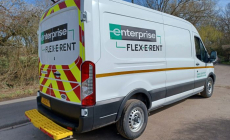
ENTERPRISE FLEX-E-RENT TARGETS FLEET DIGITISATION INNOVATION WITH SURECAM PARTNERSHIP - August 27, 2026
-
PROLOG FURTHER STRENGTHENS COMMERCIAL TEAM WITH APPOINTMENT OF BUSINESS DEVELOPMENT MANAGER - August 25, 2026
-
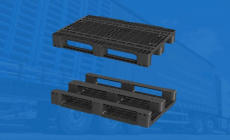
GOPLASTICPALLETS.COM LAUNCHES UK’S LIGHTEST EURO PLASTICPALLET TO BOOST EXPORT EFFICIENCY - August 19, 2026
Urban logistics: How can sustainable distribution be achieved in European cities by 2030?
Europe needs less regulation, more planning and more pricing for urban logistics according to a major study MDST has completed for the European Commission on urban freight transport (UFT). The pan-European study reviewed existing practices and measures that are employed by both the public and private sectors across the EU to maximise the effectiveness of “last mile” deliveries in urban areas and provided recommendations for future policy initiatives at a European level. The overall policy objective for the study, given the EC’s objective of “essentially CO2-free city logistics in major urban centres” by 2030, was “sustainable urban distribution”; this combines maximising the economic efficiency of distribution in urban areas while minimising the environmental and social impacts.
Actors in the freight industry are continually seeking to reduce their costs in order to remain competitive but there remains an element of market failure because only a proportion of the net externalities generated by freight movements to, from and within urban areas are reflected in the price charged by freight operators to its customers. In the long term, therefore, a comprehensive system of road pricing at a European level including urban road networks could provide significant benefits. Such a system would provide appropriate price signals to the market and should lead to a reduction in other regulations and the removal of all direct and indirect subsidies to the freight transport industry. Governments will find that fuel tax revenue will begin to decline as more efficient engines reduce consumption per kilometre, making explicit road pricing attractive to finance ministries.
In the short- to medium term, there should be greater focus by city authorities on harmonising regulations at a regional or national level to reduce the regulatory burden on the road freight industry and a greater focus on the implementation of ITS to assist freight operators, as well as a more structured approach to providing a network of on-street loading and unloading bays.
This will require a greater emphasis on planning for freight activity in major cities through so-called Urban Logistics Plans (ULPs), which should be based on establishing knowledge of the freight industry through data collection, thorough industry consultation and ex-ante and ex-post evaluation techniques. The adoption of ULPs by city authorities would provide a consistent long-term strategic planning approach to freight policy in major European cities, which would allow the freight industry to invest in equipment and operational practices to secure more effective UFT in the future.
It is only through private sector action, working in close collaboration with the public sector and within a consistent long-term policy framework, that the European Commission’s objective of “essentially CO2-free city logistics in major urban centres” can be achieved by 2030.