
-
Nulogy Introduces the Manufacturing Operating System - 2 days ago
-
Bliss Direct scales to 300 daily orders and saves 25 hours per week with Forterro’s Orderwise ERP - February 25, 2026
-
Wootzwork raises $6.6M to bring predictability to offshore manufacturing - February 25, 2026
-
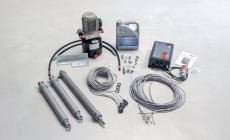
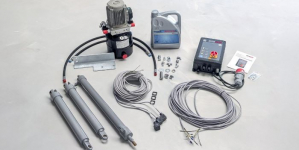
Rite-Hite unveils new range of hydraulic kits to upgrade and extend dock leveller performance - February 19, 2026
-
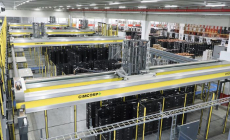
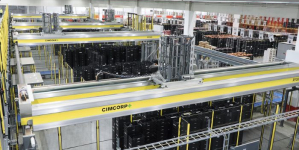
REWE and Cimcorp automate fresh supply chain for Berlin supermarkets and stores - February 19, 2026
-
NULOGY’S SHOP FLOOR SOFTWARE TO POWER COMPLETE CO-PACKING’SOPERATIONS - February 13, 2026
-
Wallapop and Albatross Sign Strategic Partnership to Bring Real-Time AI Discovery to the Future of Consumer-to-Consumer Commerce - February 12, 2026
-
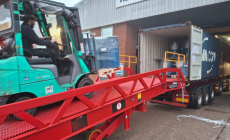
Thorworld ramp helps Hubergroup to streamline its unloading operation - February 6, 2026
-
A journey from apprentice to fully qualified paint sprayer - February 5, 2026
-
TRACKER INNOVATION FROM QUECLINK TO BOOST STOLEN VEHICLE RECOVERY PERFORMANCE - February 4, 2026

Makersite Offers Faster Analysis of Product Sustainability, Costs, Supply Chain Stewardship.
Today at SB’17 Copenhagen, Makersite co-founder Christoph Wilfert will take attendees through the new features and expanded functionality of the all-in-one open data platform for eco-design, product costing and stewardship.
Product teams use it to analyse and collaborate on how things are made and to improve the impacts of making them.
As the company explained in a release, Makersite now offers more than 30 apps tailored to various business, compliance, health and environmental evaluations. Product teams can use them to quickly explore the effects of different product configurations, such as global warming, eutrophication, carcinogenicity, RoHS and REACH compliance and production costs.
The data serves as a product datasheet lookup for engineers, designers, analysts, and academics, to share analyses within a team, for data submission and for collaboration with suppliers. It is also used to analyse, improve and publish product data, for Q&A on product-related themes, and for teaching and education.
“The new apps create an even better user experience on Makersite. They smooth the way for a completely interactive, human-managed, machine-aided analysis,” says Neil D’Souza, chief developer and co-founder. “This saves a lot of time. Evaluations previously taking months to complete can now be done within a couple of days.”
Open, transparent and fast
Makersite models how things are made through thousands of connected industrial process chains down to the substance level. With millions of data points, it is now the largest database on impacts, costs and risks of making products. Data is constantly updated to reflect changes in regulations and product evolutions. Users can customize thousands of available product models or configure their own product to discover and analyse risks or impacts across value chain and life-cycle.
Calculations are done using open as well as third-party commercial data to ensure dependable results. The ability to compute across private and public data, while protecting intellectual property at a granular level, removes an important barrier to supply chain collaboration and product stewardship. Premium features, such as commercial data and private team collaboration, will be available later this year.
“Making profitable, sustainable products means piecing together information from many sources, which is very time-consuming,” Wilfert says. “Makersite is the only place where you can analyse and model how things are made, and collaborate over data on how to make them better.”
First published at: www.sustainablebrands.com