

-
CTRACK BRINGS AI-ENHANCED SOFTWARE PLATFORM TO THE UK FOR INTELLIGENT FLEET AND ASSET MANAGEMENT - 18 hours ago
-
QUECLINK LAUNCHES HIGH-SPEC TRAILER TRACKING SOLUTION - 19 hours ago
-
Sybilion raises $4.2M to help industrial companies act with confidence in volatile markets - March 11, 2026
-
Anchr raises $5.8M to bring AI-native automation to America’s food supply chain - March 10, 2026
-
Mirai Robotics raises $4.2M pre-seed to build autonomous and intelligent maritime systems to master every sea - March 9, 2026
-
Amcor to present engineered Stretch Hood solutions for automated pallet protection at LogiMAT 2026 - March 6, 2026
-
FOOD RETAILERS TARGETING CUSTOMS IMPROVEMENTS TO TACKLE THE IMPACT OF UK-IRELAND CROSS-BORDER DELAYS - March 3, 2026
-
GOPLASTICPALLETS.COM AND GOMI TEAM UP TO CREATE INNOVATIVE TECH FROM END-OF-LIFE PALLETS - March 2, 2026
-
Nulogy Introduces the Manufacturing Operating System - February 27, 2026
-
Bliss Direct scales to 300 daily orders and saves 25 hours per week with Forterro’s Orderwise ERP - February 25, 2026

The Three Easy Steps to Fixing Belt Tracking Issues
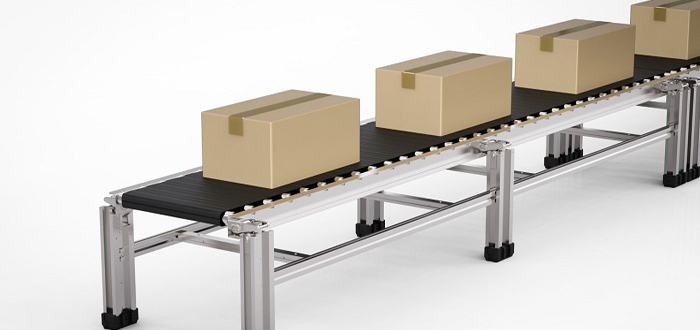
Conveyor belts have been a key part of industry since 1892. Ever since Thomas Robins began a series of inventions that ultimately led to the development of the ‘conveyor belt’, they have been used in the coal, steel and mining industries, not to mention baggage reclaim at almost all airports.
For a relatively simple piece of mechanical engineering, it’s not without problems. Like any equipment, it’s going to develop faults and problems over its lifetime. When it comes to conveyor belts or conveyor rollers, there are often some easy fixes to get you (and it) moving again.
One of the most common problems with belts of all lengths, regardless of application or complexity is tracking issues. Ensuring that the belt is correctly aligned and controlled so it follows its set path is, essentially, what a conveyor belt is designed to do.
If it’s fallen out of alignment for some reason, the whole belt can stop functioning correctly, so it’s important to get it fixed straight away. Even small issues can cause big problems. Let’s take a look at three simple steps you can take to solve most belt tracking issues.
Before we look at the tracking issues themselves, let’s briefly talk about some checks you should make before you break out the spanner. The first thing to look for is that the belt itself is level and / or ‘square’. Most mis-tracking issues start from a belt that is off-centre which causes the belt to pull to one side or the other.
Use a standard spirit level to make sure the frame and pulleys are at their correct level. To ensure it remains square, snap the dimensions of the belt from one corner to the opposite side. The measurements should be equal, although most manufacturers add squaring rods on the bottom side of the belt, so if they’re not as expected, you can use these rods to realign the frame.
Another simple check to make is to look for any debris that has built up around one, or both, of the end pulleys. If not cleared, this can cause a raised portion on the pulley, known as a crown, which will ultimately end up with the belt mis-tracking.
If your belt has tracking issues, here is what you need to do in 3 simple steps.
1. Whilst the belt is running, you need to loosen the sub-roller by loosening the set of bolts that are nearest to the tail pulley. This is the primary means of steering the belt.
2. With the bolts loosened (but not completely removed) use a rubber mallet to tap the bolts in the direction you need the belt to go. For example, if it’s pulling left, you’ll want it to go right looking from the in-feed end, so tap the bolts on the right-hand side. This will move the sub-roller. Once you’re happy, retighten the bolts and test the conveyor. It may take 5-10 full revolutions to see the change take effect. It’s best to make small, gradual adjustments, rather than huge swings.
3. You may need to repeat these steps a number of times, but you’re looking for the centre of the belt to be within 1/4” of the centre of the tail pulley. If your belt is long, then you might need to adjust all of the sub-rollers, but start with the one nearest to the end and work towards the centre.
If these fail to resolve the issue, it’s worth checking that the belt itself is straight. It’s not uncommon for the belt itself to have been mis-cut or shipped with an arc, or curve to it. Simply remove the belt and lay it on the floor. You’ll soon see if there’s a problem and if so, it will need to be replaced.