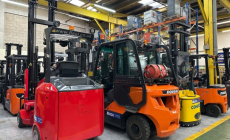
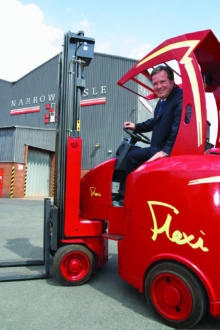
The growth in demand for lithium-ion powered warehouse lift trucks is due, in part, to the fact that today’s sophisticated materials handling equipment users calculate the cost of operating a truck over the course of its entire working life, says John Maguire, managing director of Narrow Aisle Ltd
Lift truck specifiers from many of the UK’s leading retailers, manufacturers and third party logistics specialists are now more than ever taking the long view when it comes to specifying their materials handling fleet.
Rather than opt for the brand that offers the least thoughtful solution and cheapest up-front cost, today’s sophisticated users prefer to calculate and compare the costs that different lift truck solutions, technologies and models will incur over the course of their whole working life.
To arrive at this figure a number of factors must be taken into account. For example, how safe and productive are the trucks proposed, and how much is spent each year on a truck’s maintenance? What are the indirect costs to the business if a forklift is unavailable for a period of time because it requires a visit from a service engineer to repair? How much does the truck cost in energy per operating hour? The list goes on.
Once the sums have been done, lithium-ion-powered trucks are increasingly seen to offer the best long-term value proposition. Lithium-ion forklifts score highly over trucks that run on traditional power sources in several key areas – including performance, truck availability and low maintenance. Additional benefits such as no emissions, less workplace noise, longer and more productive shifts add to their appeal.
Lithium-ion batteries are exceptionally quick to charge, usually reaching full charge in around an hour. And, thanks to their fast charging capability, the battery exchange process is eliminated – which means less truck downtime even during seasonal or daily peaks in activity.
Furthermore, lithium-ion powered forklifts can be opportunity charged in any setting in the building, often much closer to the workplace – increasing truck availability. And because they do not require watering, equalising or cleaning, lithium-ion batteries are virtually maintenance free.
In addition, lithium-ion batteries distribute consistent power levels each hour, which means maximum warehouse throughput efficiency is achieved even during the busiest multi-shift operation.
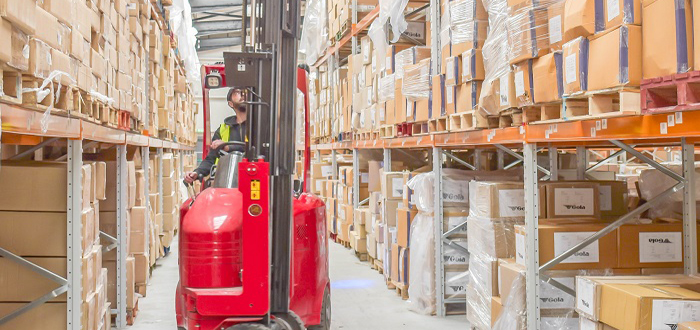
Narrow Aisle’s LiTHiON range of lithium-ion Flexi articulated very narrow aisle intralogistics solutions was introduced some two years ago and the trucks are now operating at customer sites worldwide.
For example, eight machines – built at Narrow Aisle’s manufacturing facility in the UK – have recently been ordered, together with battery charging facilities, to work at Samsung Mexicana’s Tijuana plant, where semi-conductor devices and electronic components for the automotive and consumer sectors are produced.
The trucks specified by Samsung feature full digital control technology that delivers integrated performance and results in greater reliability, higher productivity and significantly reduced operating and maintenance costs.
Being a company that takes its environmental and corporate social responsibilities seriously, the Flexi LiTHiON’s ability to create a better working environment thanks to its low emissions, was a key factor in Samsung’s purchase decision.
But, of course, while environmental pressure is a growing consideration for truck specifiers across the world, there is no escaping the fact that price remains a key influence during the decision making process.
And, while lithium-ion forklifts may come with a higher initial price tag than some trucks driven by the established old fuel sources, once ‘end-to-end’ costs are understood and compared, lithium-ion’s various benefits combine to deliver a very attractive investment offer.
In today’s ultra-competitive business environment an intralogistics solution’s lifetime running costs have become a priority. And, because the compelling long-term payback figures that lithium-ion lift trucks deliver resonate so clearly with those who take a more considered approach to forklift acquisition, the outlook for the old power sources – most notably LPG and diesel – looks bleak.